
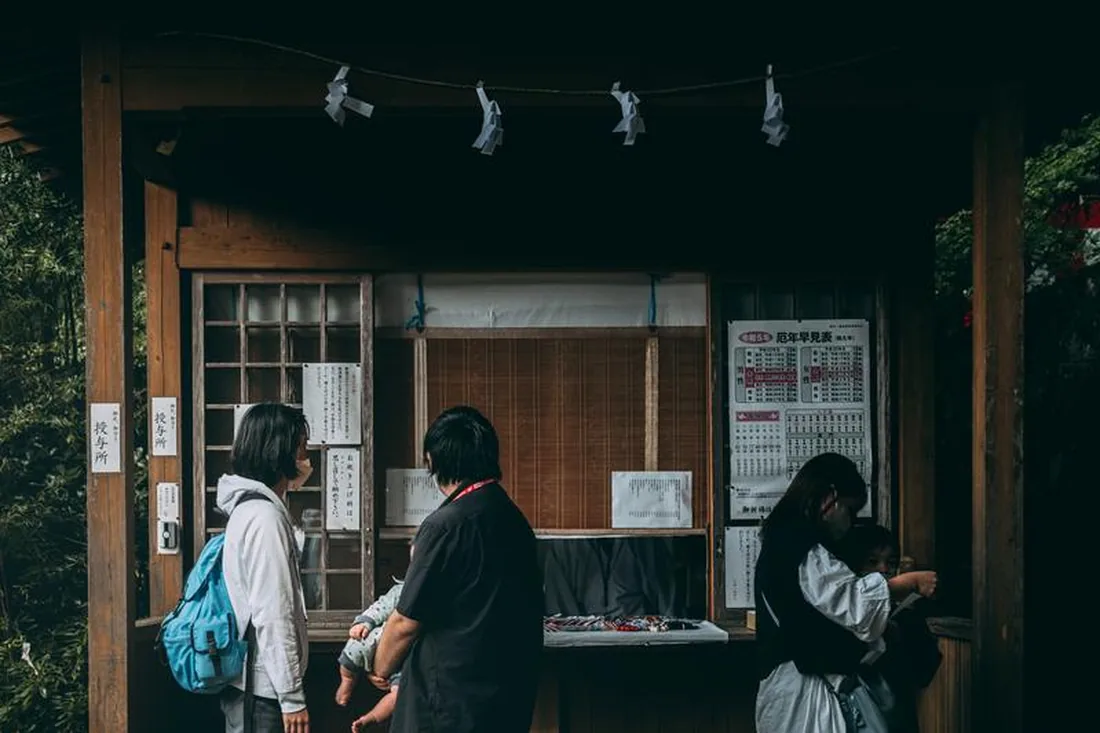
Buy your first one where you are visiting
Anywhere is acceptable, but for a first book the office at the place you are visiting is the surest choice, for three reasons.
- You can have the first page written there and then, so the book opens with the place that sold it
- The price sometimes includes that first entry, and you can simply ask
- You can handle it: paper weight, the fold, the size, all obvious in the hand
Designs also differ from place to place, and books you can only get at that one shrine or temple are common.
Not everywhere sells them, though. If you can check before you go, do.
Where to buy, and what each is good at
| Source | Good at | Poor at | Typical price |
|---|---|---|---|
| Shrine or temple office | First entry on the spot, exclusive designs | No choice of large or unusual formats | 1,500-3,000 yen |
| Specialist shop | Choice of paper, size and construction | Very few shops | 2,000-5,000 yen |
| Online | Large format, irregular sizes, personalisation | You cannot feel the paper | 1,500-4,000 yen |
| Stationers and bookshops | Available immediately | Limited range | 1,500-3,000 yen |
| Making your own | Any size, any paper | Takes real work | around 1,000 yen |
Hundred-yen shops rarely stock the books themselves. They do stock covers and storage, which is where to look there.
What the price difference buys
Setting design aside, the money goes into paper and covers. Three things to look at.
- Paper weight. Cheap books use light paper and ink comes through. If you mean to use the reverse, this is where to spend
- Number of folds. Twenty-four folds, 48 faces, is standard. Fewer and the book ends sooner than you expected
- Cover material. Cloth holds its corners better than paper. Nishijin weave and kinran cost more and last longer
Since using the reverse changes what paper you need, reading using the reverse side first makes the choice easier.
What to check when ordering online
Without the book in your hands you have to read the numbers. Four are enough.
- External size. Standard is about 16 x 11 cm, large about 18 x 12 cm
- Pages or folds. Look for a figure like 24 folds, 48 faces
- Paper. Hosho or heavy washi means the reverse is usable
- Concertina or not. Stitched and tied bindings are also sold. Neither is wrong; the pages simply open differently
Some sellers will put a name on the cover slip. Beyond looking good, it prevents mix-ups where several similar books sit on a counter.
Second and subsequent books
What you are choosing for changes after the first one.
- First book: something you can hold, with a first entry available on the spot. The office wins
- Later books: fix whatever annoyed you last time. Heavier paper if ink came through, large format if it felt cramped
How many you need depends on whether you separate shrines from temples, which the one book or two finder works out from your conditions. If a numbered circuit is on the horizon, you may need a nokyocho rather than a goshuin book; see nokyocho and goshuimoncho.
Read next
Practice around goshuin and the books that hold them differs between shrines, temples and Buddhist schools. What follows is general orientation, not a rule. Notices posted on site and the guidance of the office there always take precedence. Nichiren-shu temples inscribe a goshuimon, and some will not write it into a book that already holds entries from elsewhere.
PR — This page contains promotional content
Frequently asked questions
Where is the best place to buy a goshuin book?
For a first book, the office at the place you are visiting. You can have the first page written there, handle the book before buying, and ask whether the price already includes that first entry.
What does a goshuin book cost?
Mostly 1,500 to 3,000 yen, rising to around 5,000 for specialist shops and woven covers. The difference is almost entirely paper weight and cover material, so if you intend to use the reverse, spending on paper is worthwhile.
Do hundred-yen shops sell goshuin books?
Rarely the books themselves. They do carry covers and storage, and for a standard-size book a B6 or A6 clear book cover works well as a substitute.
What should I check when ordering online?
External size (standard around 16 x 11 cm, large around 18 x 12 cm), number of folds (24 folds and 48 faces is standard), the paper (hosho or heavy washi means the reverse is usable), and whether it is a concertina. A listing that states none of these is worth avoiding.
Could I use a sketchbook or a notebook instead?
Better not. Some offices will decline to write in one, and the paper is wrong for brush and ink: it bleeds, and seal paste does not sit well on it.